About the Centre

C3A - Centre Agriculture Food Environment was established through a collaboration between the University of Trento and Fondazione Edmund Mach, with the aim of consolidating and developing existing synergies. Established under a framework agreement signed on 22 September 2015 and inaugurated on 21 September 2017, the Centre brings together scientific expertise, advanced facilities and educational programmes in the fields of agriculture, food and the environment.
C3A promotes high-quality research and education in smart and sustainable agriculture, quality food production, environmental impact mitigation and the responsible management of natural resources. Its interdisciplinary approach connects laboratory research, field experimentation and environmental monitoring, with the aim of developing innovative, effective and low-impact solutions.
The Centre supports joint research projects, advanced education initiatives, technology transfer activities and the dissemination of knowledge at local, national and international level. It also promotes the sharing of expertise, staff, facilities and spaces between the founding institutions, helping to strengthen the quality and impact of research and its application in society. Collaboration with public bodies, research centres and businesses fosters innovation, the valorisation of research outcomes and their transfer beyond the academic sphere.
C3A contributes to the development of joint educational programmes and doctoral training. It is the academic home of the Bachelor’s degree in Viticulture and Oenology, the Master’s degree in Agrifood Innovation Management and the PhD programme in Agrifood and Environmental Sciences. It also participates in the Master’s degree in Environmental Meteorology.
C3A develops research and innovation for sustainable, resilient and low-impact agricultural systems.
Its activities integrate crop genetics, plant physiology, microbiology, entomology, plant pathology and agroecology, with the aim of improving productivity while reducing pressure on natural resources.
The Centre develops sustainable crop protection strategies, seeking to reduce the use of synthetic pesticides and fertilisers. Research focuses on biological control, bio-inputs (such as biofungicides, biostimulants and biofertilisers), semiochemicals and advanced monitoring systems for the prevention and management of pests and diseases.
C3A also studies invasive species, emerging pathogens and climate-related risks, combining field trials, omics technologies, molecular diagnostics and modelling. The goal is to provide practical solutions for agriculture and its supply chains.
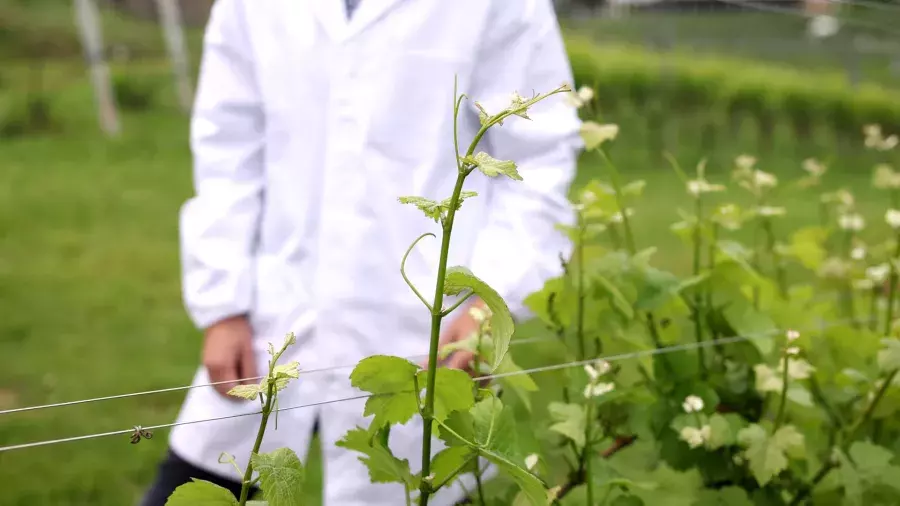
Research also supports climate-smart viticulture and fruit growing, with a focus on quality, resilience, reduced inputs and adaptation to environmental stresses.
C3A brings together advanced food characterisation, sensory analysis, consumer behaviour, traceability, agri-food technologies and the social, legal and economic dimensions of food systems.
The Centre studies raw materials, processed products and beverages - particularly wine - across the entire supply chain. Its research activities support quality assessment, authenticity verification, product differentiation and the valorisation of territorial food systems.
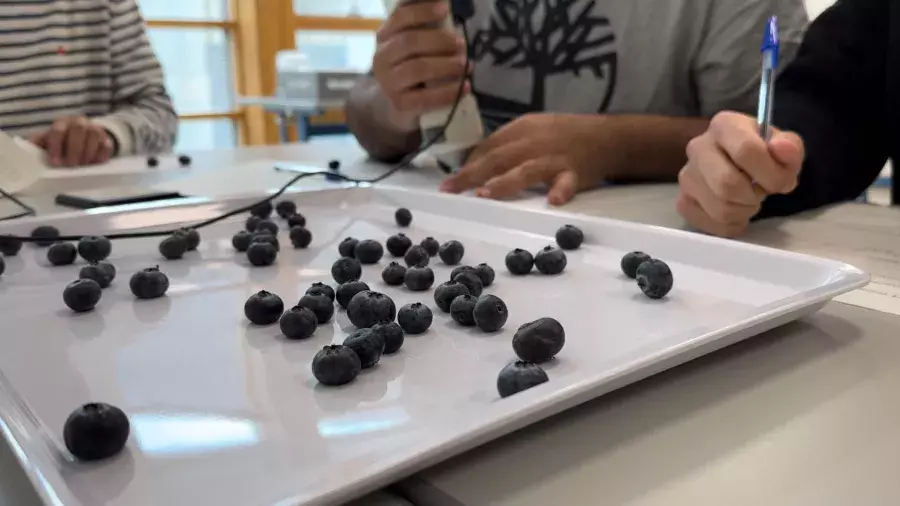
We use advanced analytical approaches - including spectroscopy, omics methods, stable isotope analysis and NMR profiling - to verify origin, protect geographical indications and develop reliable traceability tools. We also study sensory quality and consumer responses, analysing the factors that influence perception and food choices.
Our research also extends to the social, legal and economic aspects of agri-food systems, with a focus on regulation, innovation, sustainability policies and market dynamics. Finally, C3A addresses innovation in processing, packaging and industrial sustainability, promoting green technologies, circular economy solutions and more efficient use of resources.
C3A studies alpine and mountain ecosystems to support biodiversity conservation, climate change adaptation and the sustainable management of natural resources.
Research uses field observations, ecological modelling, remote sensing and GIS analysis to monitor environmental change across different scales. The Centre develops models and tools to analyse the evolution of forests and landscapes, assess ecosystem fragmentation, study the effects of extreme events and support land-use planning and forest management.
C3A also investigates the interactions between climate, vegetation and agricultural and forest systems, including the monitoring of meteorological variables, water resources and vegetation–atmosphere exchanges, as well as the impacts of climate change on ecosystems.
Particular attention is devoted to biodiversity, invasive species, ecosystem services and the relationship between the environment and society. By integrating ecological, climatic and socio-economic data, the Centre provides knowledge and tools for the management and protection of alpine environments.